


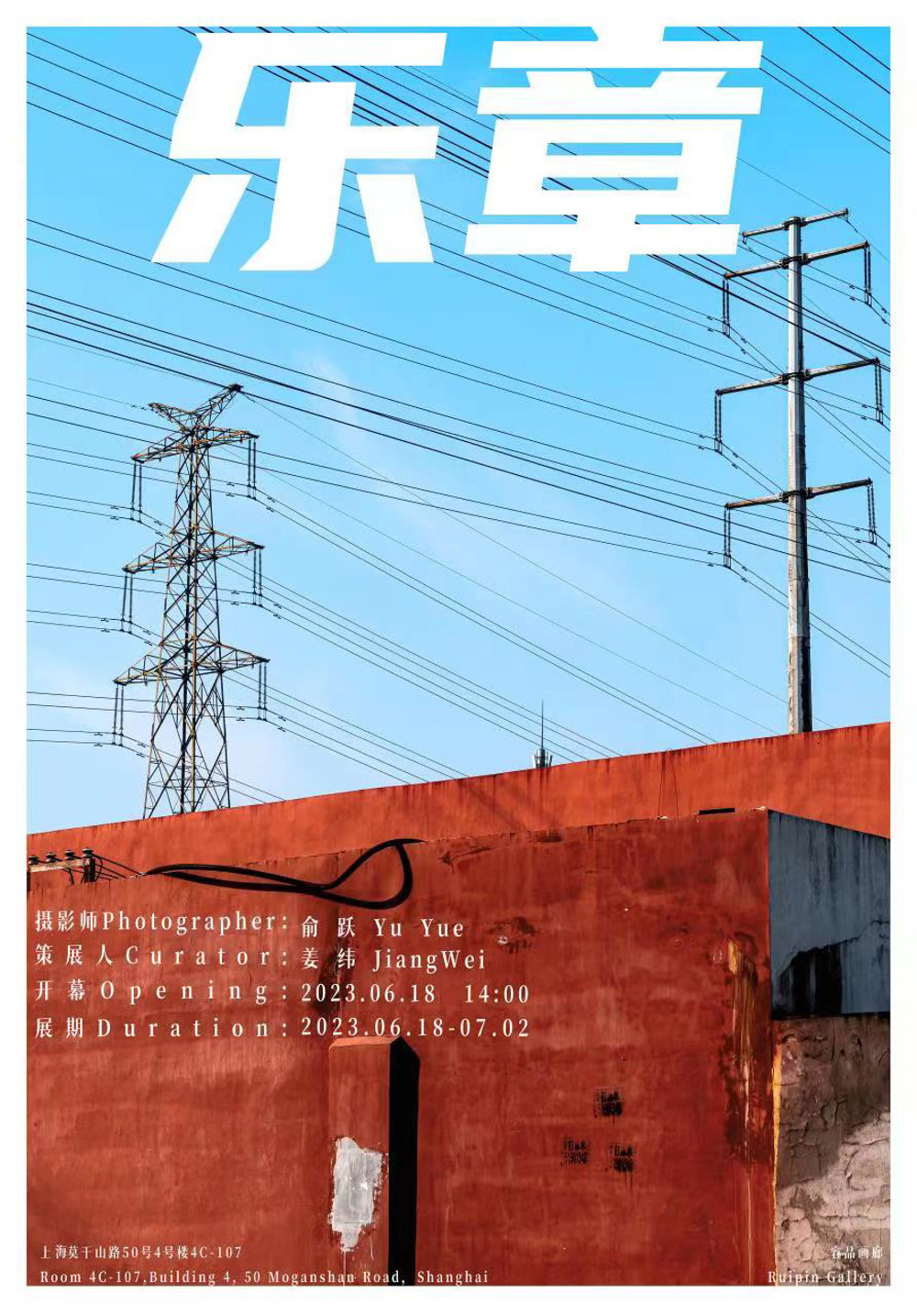
The theme of Yu Yue's exhibition this time is electrical equipment. In his autobiography, he wrote, "The decomposition and reconstruction of electrical equipment give its artistic expression rhythmic and rhythmic changes. These changes, through the arrangement and combination of forms such as continuity, interweaving, gradient, rotation, mutation, and freedom, create a visual impact on people, creating a strong sense of space and rhythm, thus making static images become rhythmic images
So, 'power equipment' is just a carrier, what Yu Yue really wants to capture is' dynamic images'. Since 2021, the filming mileage of this project has reached over 2000 kilometers.
At the moment when people come into contact with and feel the subject being photographed, the subject is placed in an understandable relational system. Within an ideology, they have their own position. The ideology referred to here refers to a series of propositions about the natural and social world that are widely accepted in a specific society as describing the actual nature of the world and its events. Ideology is the sum of natural realities in daily life, a predetermined decision of individual consciousness, and a common reference framework for individual action projection.
The world is certainly not defined by whether we can find images within it. However, this world is defined by the visible appearance of the world in the image when we find it. If we inevitably have to live in a world of universal visualization, how can images help us rebuild our understanding of the world?
We can understand the "world" as different "forms" or completely different worlds based on the perspective of whether the image exists, is visible, and allows it to be seen, according to the correlation between the cutting ideas and objects indicated by speculative realism. These "world forms" may not be entirely real, but may be "inferred reality".
People are the most important dimension of images, and images therefore construct a bounded world that people perceive. Each condition implies a relationship, and every boundary is closely related to the existence of people. Every substance that appears in the world has functionality, is classified as an object variant, and integrated into an object system. The larger the range of object variants, the richer the semantic possibilities. The reason why images exist is that people need to overcome the fact that the world they live in is essentially a very narrow world, within limited boundaries, which is why people constantly produce images.
Therefore, when we read Yu Yue's works, whether or not we directly understand the meaning of the context, the photographer himself never attempts to make any "voiceover style" annotations, but instead repeatedly allows the audience to comprehend and perceive them. What attracts him to photography is what he sees in front of him, a part of a structured world. When they are combined, they seem to be understandable and have a strong sense of presence. The scattered urban and rural landmarks and diverse imagery make these works present multiple meanings.
Yu Yue's works emphasize the themes of nature or urbanization processes that have been altered by humans. He juxtaposes rigorous forms with the documentary characteristics of instantaneous recording, both far sighted and close-up, making the audience feel as if they are there, with time and space seemingly stagnant, waiting for an uncertain future.
Valery once said that if we intercept a word from a statement and provide an explanation, we may encounter unexpected difficulties. We only understand the meaning of this word when it returns a statement. That is to say, simply consulting a dictionary is not enough, what is important is to revive the various relationships of this word in the sentence. The same goes for photography. The "electrical equipment" in Yu Yue's photos further proves that the relationships around a key object may exist in the context of the entire era, and these relationships are the more reliable annotations.
Photography is not anything given, but a verb, an experiential process. Photography only has vitality and power when it can withstand chaos and noise. Photography is not simply about creating images, nor is it simply about receiving reflections from the world. Instead, it should actively empower the world with something.
Endow the world with something, Yu Yue named his works' Music '. The simplest and most touching expression and transmission in art and life is through rhythm and breath, as the saying goes, 'Biology communicates through communication.'. Jazz pianist Salonis Monk said very well: 'The so-called new music is something that cannot be found anywhere. Look at that keyboard, all the music has already been arranged there. As long as you solidly inject meaning into a music, it will produce a different kind of music.'.
When a photographer truly enters the interior of the earth, truly enters a certain piece of land and explores it, it does open up one's inner vision. Yu Yue's "Symphony" series provides strong visual evidence for the various environments created by human beings, presenting the impact of human beings as the main body of urban and rural life and society, as well as their complex effects on urban and rural areas and society.
——姜纬
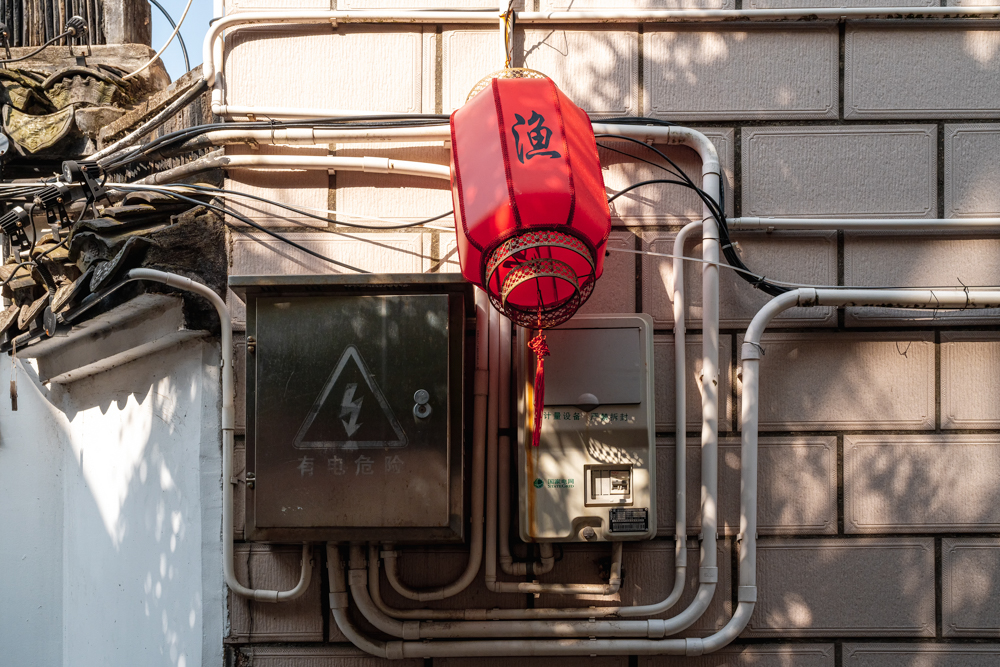
Vasily Kandinsky said in "On the Spirit of Art": "Colors are like piano keys, eyes are like hammers, the mind is like a piano with strings taut, and the artist is like the hand playing the piano, purposefully playing each key to create various waves and reactions in the human spirit
The decomposition and reconstruction of power equipment result in rhythmic and rhythmic changes in its artistic expression. These changes are arranged and combined in a continuous, staggered, gradual, rotating, abrupt, and free form, creating a visual impact and a strong sense of space and rhythm. As a result, static images become rhythmic images. The interdependence and causality between elements and different backgrounds endow them with the ability to infect and regulate viewers' emotions, and this characteristic and influence will run through the entire work. Therefore, the series of images is named "Symphony".
The meaning of 'maritime chapter' is to limit the physical space where the subject is located from a long timeline, making the elements presented more regional. Since its establishment in 2021, the project has covered over 2000 kilometers of filming, and "on the road" has become a norm, attempting to complete phased image output through years of accumulation.
——Yu Yue
About Curators
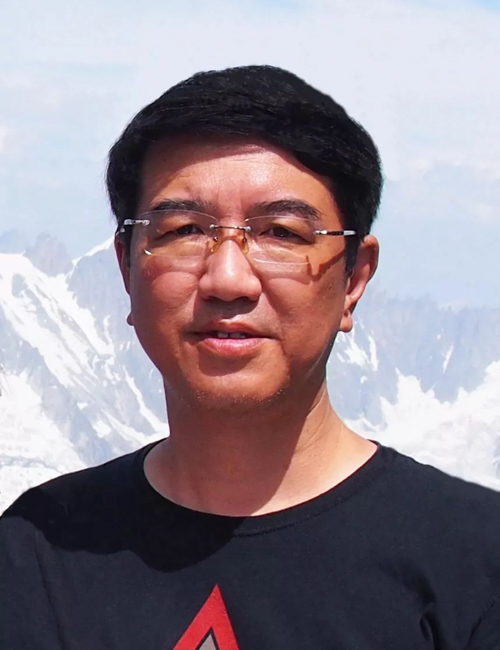
Jiang Wei is a photography critic, curator, and publishing planner
Serving as the academic committee member of Guangzhou International Photography Biennial, National Youth Photography Exhibition, and final judge of China Photography Annual Ranking List, the chief curator of "Art Jiangnan" Yangtze River Delta Photography Art Week, as well as the judge of Southern Multimedia Short Film Festival, TOP20 Contemporary Photography New Talent Exhibition, Shanghai Photography Art Exhibition, Zhejiang Photography Golden Statue Award, "Xu Xiaobing Cup" China Documentary Photography Exhibition, Chongqing Photography Art Exhibition, "Boqi Cup" China Creative Photography Exhibition, Jimei China New Scenery Top Ten, Zhejiang Youth Photography Exhibition, and the academic host of China Luoping New Scenery Photography Exhibition, "Langjingshan Cup" China New Painting Photography Biennial, Yibin Human Geography Photography Exhibition.
Received the Outstanding Curator Award at the Lianzhou International Photography Exhibition, Best Curator Award at the Shanghai International Photography Festival, Best Curator Award at the Lishui Photography Festival, Outstanding Mentor Award at the Shanghai Youth Photography Art Exhibition, and Theoretical Review Award at the China Photography Golden Statue Awards.
I have taught and lectured at China Academy of Art, China Normal University Academy of Fine Arts, Shanghai Jiao Tong University School of Media and Design, Zhejiang Photographers Association, Suzhou Photographers Association, Zhejiang University of Finance and Economics Art College, Shanghai Art Museum, Shanxi Media College, and other places. Since 2007, he has been the planner of the "Documentary on Paper" series of visual books, and has edited and published over fifty Chinese and English book catalogs.
© CopyRight 2023 Yu Yue Photocopying Shanghai ICP No. 2023013283